
5 essential dog commands

Are you looking for the best commands to teach your dog? Although having a trained dog isn’t the same as having a balanced dog, teaching your dog basic dog training commands can be helpful when tackling behavior problems despite whether they are existing ones or those that may develop in the future.
So where exactly do you start with teaching your dog commands? While taking a class may be beneficial for you and your pup, there are many dog training commands you can teach your dog right at home. Below, we’ve listed the best list of dog commands you and your pup are guaranteed to enjoy.
Sit
Teaching your dog to sit is one of the most basic dog commands to teach your pup, thus making it a great one to start with. A dog who knows the “Sit” command will be much calmer and easier to control than dogs who aren’t taught this simple command. Additionally, the “Sit” command prepares your dog for harder commands such as “Stay” and “Come.”
Here’s how to teach your dog the “Sit” command:
- Hold a treat
close to your dog’s nose.
- Move your hand up, allowing his head to follow the treat and causing his bottom to lower.
- Once he’s in sitting position, say “Sit,” give him the treat, and share affection.
Repeat this sequence a few times every day until your dog has it mastered. Then ask your dog to sit before mealtime, when leaving for walks and during other situations when you’d like him calm and seated.
Come
Another important command for your dog to learn is the word “come.” This command is extremely helpful for those times you lose grip on the leash or accidentally leave the front door open. Once again, this command is easy to teach and will help keep your dog out of trouble.
- Put a leash
and collar
on your dog.
- Go down to his level and say, “Come,” while gently pulling on the leash.
- When he gets to you, reward him with affection and a treat.
Once he’s mastered it with the leash, remove it and continue to practice the command in a safe, enclosed area.
Down
This next command is one of the more difficult dog training commands to teach. The reason it may be hard for your dog to master this command is that it requires him to be in a submissive posture. You can help out your dog by keeping training positive and relaxed, especially if your dog is fearful or anxious. Also keep in mind to always praise your dog once he successfully follows the command.
- Find a particularly good smelling treat
, and hold it in your closed fist.
- Hold your hand up to your dog’s snout. When he sniffs it, move your hand to the floor, so he follows.
- Then slide your hand along the ground in front of him to encourage his body to follow his head.
- Once he’s in the down position, say “Down,” give him the treat
, and share affection.
Repeat this training every day. If your dog tries to sit up or lunge toward your hand, say “No” and take your hand away. Don’t push him into a down position, and encourage every step your dog takes toward the right position. After all, he’s working hard to figure it out!
Stay
Similar to the “Sit” command, the “Stay” cue will help make your dog easier to control. This command can be helpful in a number of situations such as those times you want your dog out of the way as you tend to household chores or when you don’t want your pup overwhelming guests.
Before attempting to teach your dog this command, make sure your dog is an expert at the “Sit” cue. If he hasn’t quite mastered the “Sit” command, take the time to practice it with him before moving on to the “Stay” cue.
- First, ask your dog to “Sit.”
- Then open the palm of your hand in front of you, and say “Stay.”
- Take a few steps back. Reward him with a treat and affection if he stays.
- Gradually increase the number of steps you take before giving the treat
.
- Always reward your pup for staying put — even if it’s just for a few seconds.
This is an exercise in self-control for your dog, so don’t be discouraged if it takes a while to master, particularly for puppies and high-energy dogs. After all, most dogs prefer to be on the move rather than just sitting and waiting.
Leave it
This last command can help keep your dog safe when his curiosity gets the better of him such as those times when he smells something intriguing but possibly dangerous on the ground. The goal is to teach your pup that he gets something even better for ignoring the other item.
- Place a treat in both hands.
- Show him one enclosed fist with the treat inside and say “Leave it.”
- Ignore the behaviors as he licks, sniffs, mouths, paws and barks to get the treat.
- Once he stops trying, give him the treat from the other hand.
- Repeat until your dog moves away from that first fist when you say “Leave it.”
- Next, give your dog the treat only when he looks up at you as he moves away from the first fist.
Once your dog consistently moves away from the first treat and gives you eye contact when you say the command, you’re ready to take it up a notch. For this next training method, use two different treats: one that’s good but not super-appealing and one that’s particularly good-smelling and tasty for your pup.
- Say “Leave it,” place the less-attractive treat on the floor and cover it with your hand.
- Wait until your dog ignores that treat and looks at you. Then remove that treat from the floor, give him the better treat and share affection immediately.
- Once he’s got it, place the less-tasty treat on the floor but don’t completely cover it with your hand. Instead, hold your hand a little bit above the treat. Over time, gradually move your hand farther and farther away until your hand is about 6 inches above.
- Now he’s ready to practice with you standing up! Follow the same steps, but if he tries to snatch the less-tasty treat, cover it with your foot.
Don’t rush the process of teaching your pup any one of these dog training commands. Remember, you’re asking a lot of your dog. If you take it up a notch and he’s really struggling, go back to the previous stage.
This list of dog commands can help protect your dog from dangerous situations as well as improve your communication with him. Taking the time to teach your pup these common dog commands is well worth the investment of your time and effort. Remember, the training process takes time, so start a dog-obedience training session only if you’re in the right mindset to practice calm-assertive energy and patience.
source : cesarsway
Image gallery


-

Animal systems: the cornerstone of the intelligent ecosystem of metaverse worlds and the path to the formation of biosecurity in the multiverse
Posted 2026-10-06Scientific note: The “Animal System” and “Color Metaverse Bioguard” model are discussed in this article as a proposed design and architecture, not as a scientific standard or project that has been established in the academic literature by the same name. The scientific evidence used supports the foundations of conservation biology, environmental education, augmented/virtual reality, citizen science, and biodiversity governance; linking these foundations to the metaverse architecture is a design and future-oriented proposal.
-
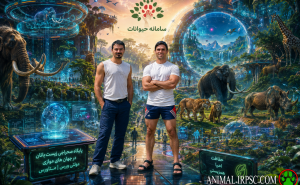
Multidimensional Ecological Guardians
Posted 2026-09-16Guardians of Multidimensional Worlds Guardians of 3D and Multidimensional Ecosystems in the Metaverse of Color and the Role of the “Animal System” in the Birth of a New Nature Abstract The entry of nature into metaverse worlds should not be understood simply as the transfer of the image of a forest, mountain, sea or animal into a 3D environment. The more fundamental issue is the construction of computational, dynamic and monitorable ecosystems; environments in which species, resources, ecological relationships, climate change and human behavior can be modelled and observed over time. In this context, the concept of “guardian” can refer to a new role in metaverse worlds: a human entity, an artificial intelligence, an automated system or a combination of these whose task is to observe, monitor, protect, warn, interpret and help manage digital ecosystems. This idea is scientifically close to real-world research trends in digital twins of ecosystems, biodiversity monitoring, animal behavior simulation, and real-time ecological modeling, but the specific form that the “biologist” takes in the metaverse of color and “animal systems” is a proposed and futuristic architecture, not an existing standardized technology. New research shows that digital twins can integrate heterogeneous biodiversity data into updatable models and even be used to predict species distributions on near-real-time time scales.
-
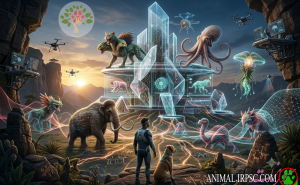
The survival of nature and the shared ecosystem with animals by entering the world of color metaverse
Posted 2026-09-16The question is ostensibly about the future of the color metaverse, but its deeper issue relates to a civilizational challenge: how can digital technologies be used to increase the capacity for cognition, conservation, and restoration in the face of the gradual destruction of natural ecosystems? Iran has a diverse range of ecosystems, from Hyrcanian forests and wetlands to mountainous, desert, and coastal areas. The issue of protecting these resources is not only an environmental issue; it is also related to the economy, culture, food security, water, tourism, education, and the future of local communities. From this perspective, the color metaverse becomes important for environmental protection when it moves beyond a purely theatrical space and becomes an infrastructure for environmental representation, monitoring, simulation, and participation.
-

The Threat of Ecosystem Collapse Caused by Illegal Wildlife Trade and Captive Keeping
Posted 2026-02-03Illegal wildlife trade and the private keeping of wild animals constitute one of the most critical threats to global biodiversity in the 21st century. Among the most affected taxa, wild and rare birds are disproportionately targeted due to their aesthetic appeal, vocal abilities, rarity, and symbolic status. This practice is particularly prevalent among affluent individuals, where wild birds are kept as luxury possessions rather than living components of complex ecosystems. Drawing upon peer-reviewed scientific literature, authoritative ecological textbooks, and reports from international conservation organizations, this article examines the ecological, genetic, behavioral, ethical, and public health consequences of illegal bird trade and captive keeping. Furthermore, it highlights the essential role of non-profit organizations such as Samaneh Heyvanat and the Birds Branch Campaign as community-based institutions dedicated to wildlife protection, and explores pathways through which the public and experts can actively support conservation efforts.
-
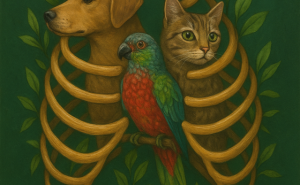
“The Disadvantages of Animal Sterilization: A Scientific Review of Hidden Harms to Health, Behavior, and Ecosystems”
Posted 2025-10-09Abstract Sterilization (neutering or spaying) is widely practiced as a means to manage the population of companion and street animals. While many advocates emphasize its benefits — such as reducing overpopulation and some reproductive diseases — growing evidence points to a suite of potential drawbacks. This article offers a scientific-analytical examination of the disadvantages of animal sterilization, particularly in street and free-roaming populations. We investigate health, behavioral, ecological, genetic, and ethical dimensions, review limitations in existing research, and propose more balanced, humane strategies.
-
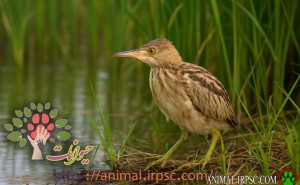
Saving the Butimar chick and the role of the Bird Branch Campaign in protecting waterfowl habitats
Posted 2025-09-02Wetland birds are an inseparable part of the nature of Iran and the world. In addition to their visual beauty, they play a fundamental role in the food cycle, pest control, and maintaining the health of aquatic ecosystems. One of these valuable birds is the bittern; a small bird from the heron family known for its distinctive call and camouflaged appearance. In recent years, with the increasing destruction of wetlands and habitats, more and more reports have been published of bittern chicks being found along roads or human-made areas. The main question is: If we encounter such a bird, what is the best way to save the birds and return them to nature? One of the public institutions working in this field is the Bird Branch Campaign; a voluntary movement that aims to educate, support, and protect birds and their habitats. In this article, we will provide a complete introduction to the botimar, its natural habitat, the correct way to deal with its chicks, and the role of the Bird Branch Campaign in this regard.


