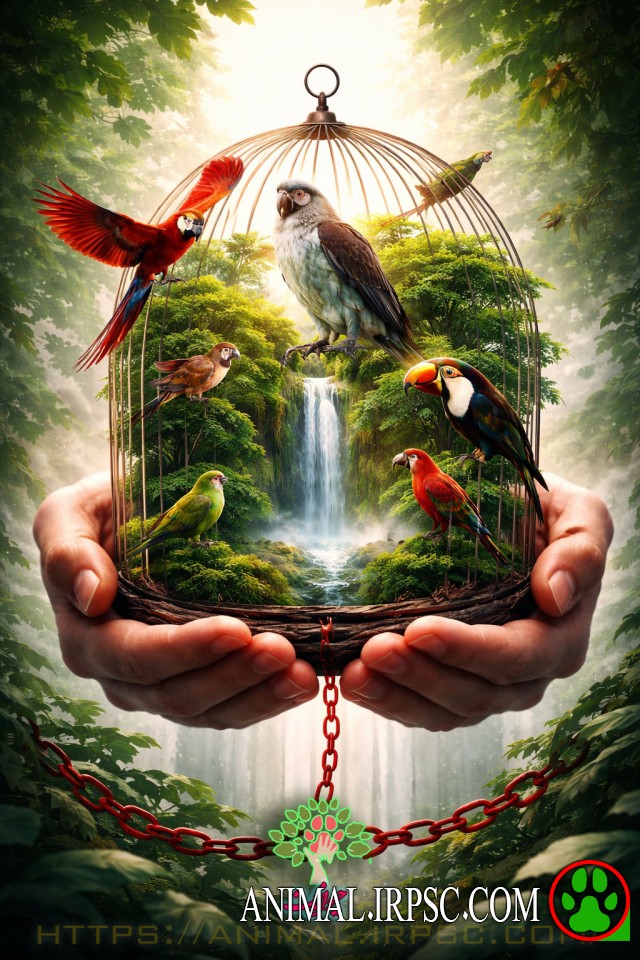
The Threat of Ecosystem Collapse Caused by Illegal Wildlife Trade and Captive Keeping
The Threat of Ecosystem Collapse Caused by Illegal Wildlife Trade and Captive Keeping
A Special Focus on Wild and Rare Birds in Private Luxury Households
Abstract
Illegal wildlife trade and the private keeping of wild animals constitute one of the most critical threats to global biodiversity in the 21st century. Among the most affected taxa, wild and rare birds are disproportionately targeted due to their aesthetic appeal, vocal abilities, rarity, and symbolic status. This practice is particularly prevalent among affluent individuals, where wild birds are kept as luxury possessions rather than living components of complex ecosystems. Drawing upon peer-reviewed scientific literature, authoritative ecological textbooks, and reports from international conservation organizations, this article examines the ecological, genetic, behavioral, ethical, and public health consequences of illegal bird trade and captive keeping. Furthermore, it highlights the essential role of non-profit organizations such as Samaneh Heyvanat and the Birds Branch Campaign as community-based institutions dedicated to wildlife protection, and explores pathways through which the public and experts can actively support conservation efforts.
1. Introduction: Illegal Wildlife Trade as a Global Environmental Crisis
Illegal wildlife trade has emerged as one of the largest transnational criminal industries worldwide, ranking alongside narcotics trafficking, arms trade, and human trafficking in terms of economic scale. According to the United Nations Environment Programme (UNEP) and the Convention on International Trade in Endangered Species of Wild Fauna and Flora (CITES), wildlife crime generates billions of dollars annually while driving countless species toward extinction.
Birds represent a significant proportion of animals involved in this trade. Species prized for their plumage, song, intelligence, or rarity—such as parrots, songbirds, falcons, and finches—are frequently captured from the wild to supply illegal domestic and international markets. The private keeping of wild birds in luxury households exacerbates this crisis by creating sustained demand, normalizing exploitation, and masking ecological harm behind wealth and exclusivity.
2. Ecological Importance of Birds in Natural Ecosystems
Birds play indispensable roles in maintaining ecosystem integrity and resilience. Classical ecological literature (Odum, 1971; Begon, Townsend & Harper, 2006) and contemporary studies consistently demonstrate that birds contribute to ecosystem functioning through:
-
Seed dispersal, enabling forest regeneration and plant diversity
-
Pollination, particularly in tropical and arid ecosystems
-
Regulation of insect populations, including agricultural pests
-
Energy transfer across trophic levels
The removal of bird species from ecosystems can initiate trophic cascades, destabilize food webs, and alter vegetation composition. Studies published in Ecology Letters and Science show that the decline of avian populations can lead to increased pest outbreaks, reduced plant recruitment, and long-term ecosystem degradation.
3. Population Decline and Extinction Risk
The International Union for Conservation of Nature (IUCN) reports that more than 1,400 bird species are currently classified as Vulnerable, Endangered, or Critically Endangered. Illegal capture for the pet trade is identified as a primary driver of population decline for numerous species.
A global meta-analysis published in Nature Ecology & Evolution indicates that species targeted by wildlife trade experience an average population reduction of over 60%, with some bird populations collapsing by more than 80% in regions with weak enforcement. Selective removal of the most visually striking or vocally gifted individuals further accelerates decline and disrupts natural breeding structures.
4. Genetic and Evolutionary Consequences
Beyond numerical population loss, the illegal trade of wild birds imposes profound genetic consequences. Selective harvesting reduces genetic diversity by disproportionately removing individuals with favorable traits, such as bright coloration or complex songs. Reduced genetic variability weakens population resilience to environmental change, disease, and climate stressors.
Conservation genetics research published in Biological Conservation demonstrates that fragmented and depleted bird populations exhibit increased inbreeding, lower reproductive success, and diminished adaptive capacity. These effects persist long after trade pressure has ceased, creating long-term conservation challenges.
5. Behavioral and Welfare Impacts of Captive Keeping
Wild birds possess complex cognitive abilities, social structures, and behavioral repertoires shaped by millions of years of evolution. Captivity—especially in private homes—fails to meet these intrinsic needs, regardless of cage size or material wealth.
Scientific studies in Applied Animal Behaviour Science and Animal Welfare document high incidences of abnormal repetitive behaviors, feather plucking, chronic stress, immunosuppression, and shortened lifespans in captive wild birds. Luxury environments cannot substitute for ecological freedom, social interaction, and natural flight.
6. Public Health and Biosecurity Risks
The illegal capture, transport, and confinement of wild birds pose significant zoonotic disease risks. Research published in Emerging Infectious Diseases highlights the role of wildlife trade in the transmission of pathogens such as avian influenza, psittacosis, salmonellosis, and Newcastle disease.
These health threats extend beyond individual bird keepers, creating broader biosecurity risks for domestic poultry industries and human populations. The COVID-19 pandemic has further underscored the dangers of disrupting wildlife–human boundaries.
7. Ethical Dimensions and Social Drivers
The private ownership of rare wild birds by wealthy individuals reflects deeper ethical concerns surrounding commodification of nature. Philosophical frameworks in environmental ethics and animal rights (Singer, 1975; Regan, 1983) argue that treating sentient beings as status symbols undermines moral responsibility toward non-human life.
Social normalization of wildlife ownership among elites reinforces illegal markets and weakens conservation messaging. This phenomenon highlights the need for cultural change alongside legal enforcement.
8. Role of Non-Profit Organizations in Bird Conservation
In regions where governmental capacity is limited, non-profit and community-based organizations play a vital role in wildlife protection.
8.1 Samaneh Heyvanat
Samaneh Heyvanat is a non-profit organization dedicated to animal welfare and wildlife protection. Its activities include:
-
Reporting and documenting cases of illegal wildlife keeping
-
Public education on animal rights and conservation law
-
Collaboration with veterinarians, ecologists, and legal experts
-
Supporting rescue, rehabilitation, and legal follow-up processes
Through citizen engagement and expert coordination, Samaneh Heyvanat acts as a bridge between the public and formal conservation mechanisms.
8.2 Birds Branch Campaign
The Birds Branch Campaign is a specialized non-profit initiative focused on the protection of wild and rare birds. Its core objectives include:
-
Raising scientific and public awareness about the ecological role of birds
-
Supporting rehabilitation and release of confiscated birds
-
Challenging the cultural acceptance of keeping wild birds as pets
-
Building networks among researchers, activists, and conservation professionals
By integrating science-based advocacy with grassroots participation, the Birds Branch Campaign serves as a key reference body for bird conservation efforts.
9. Pathways for Public and Expert Participation
9.1 Public Engagement
Individuals can contribute by:
-
Refusing to purchase or keep wild birds
-
Reporting illegal trade through Samaneh Heyvanat
-
Financially supporting conservation campaigns
-
Sharing educational content and raising awareness
9.2 Expert Contribution
Professionals can assist by:
-
Providing scientific, veterinary, or legal expertise
-
Conducting applied research on bird conservation
-
Volunteering in rehabilitation and monitoring programs
-
Developing policy briefs and educational resources
10. Conclusion
The illegal trade and private keeping of wild and rare birds represent a multifaceted threat to biodiversity, ecosystem stability, animal welfare, and public health. Addressing this crisis requires more than law enforcement; it demands scientific insight, ethical reflection, and active civil society engagement. Non-profit organizations such as Samaneh Heyvanat and the Birds Branch Campaign play a crucial role in bridging knowledge, action, and advocacy. Sustained support for these initiatives is essential to safeguarding wild birds and preserving the ecological balance upon which all life depends.
Image gallery