
Special green diamond subscription | Special green diamond subscription
Special Green Diamond Subscription
The special Green Diamond subscription registers your ad by yourself with full access to details, and you can also activate a special ad to display.
The special package of the animal system has the ability to insert specialized advertisements, and this process is in case of purchasing a special green diamond subscription package with the ability to register one of your advertisements in the context of special advertisements.
What are the plans for the special subscription of green diamonds in the animal system?
The packages available in the animal system include the following, and in this article, we will introduce the content of the third row plan, ie the special subscription of green diamonds.
Package Name: Green Diamond Special Subscription | Special green diamond subscription
Day limit: From the time you purchase the package until the end of the package, 365 days, equivalent to one year, you will benefit from the service.
Limitation of lists: With this tariff, you have the ability to insert three advertisements.
Number of special restrictions: In this package, you are able to approve one of the ads as a special ad.
In this plan we will help you to load specialized content and we will edit the textual content ourselves with the information you provide.
This process will be done in a way that makes more use of specialized content insertion techniques for better identification by search engines such as Google.
This plan includes inserting three ads and one of these ads will be displayed in the special ads section and we are responsible for editing your special ads.
What Are The Features Of The Special Content Uploaded In The Animal System?
If the ad is approved as a special ad, the level of access of system members and applicants to your ad will increase and it will have a better display and attract a higher audience.
With content SEO expertise, you can upload your ad with the best SEO mode and this ad will register and display you once and for all.
Proper advertising in the moisture system allows you to focus on your specialty without any worries and applicants are looking for you.
Blue Diamond Plan allows you to upload your special ad by system experts.
Image gallery

-
Animal systems: the cornerstone of the intelligent ecosystem of metaverse worlds and the path to the formation of biosecurity in the multiverse
Posted 2026-10-06Scientific note: The “Animal System” and “Color Metaverse Bioguard” model are discussed in this article as a proposed design and architecture, not as a scientific standard or project that has been established in the academic literature by the same name. The scientific evidence used supports the foundations of conservation biology, environmental education, augmented/virtual reality, citizen science, and biodiversity governance; linking these foundations to the metaverse architecture is a design and future-oriented proposal.
-
Multidimensional Ecological Guardians
Posted 2026-09-16Guardians of Multidimensional Worlds Guardians of 3D and Multidimensional Ecosystems in the Metaverse of Color and the Role of the “Animal System” in the Birth of a New Nature Abstract The entry of nature into metaverse worlds should not be understood simply as the transfer of the image of a forest, mountain, sea or animal into a 3D environment. The more fundamental issue is the construction of computational, dynamic and monitorable ecosystems; environments in which species, resources, ecological relationships, climate change and human behavior can be modelled and observed over time. In this context, the concept of “guardian” can refer to a new role in metaverse worlds: a human entity, an artificial intelligence, an automated system or a combination of these whose task is to observe, monitor, protect, warn, interpret and help manage digital ecosystems. This idea is scientifically close to real-world research trends in digital twins of ecosystems, biodiversity monitoring, animal behavior simulation, and real-time ecological modeling, but the specific form that the “biologist” takes in the metaverse of color and “animal systems” is a proposed and futuristic architecture, not an existing standardized technology. New research shows that digital twins can integrate heterogeneous biodiversity data into updatable models and even be used to predict species distributions on near-real-time time scales.
-
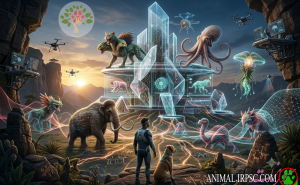
The survival of nature and the shared ecosystem with animals by entering the world of color metaverse
Posted 2026-09-16The question is ostensibly about the future of the color metaverse, but its deeper issue relates to a civilizational challenge: how can digital technologies be used to increase the capacity for cognition, conservation, and restoration in the face of the gradual destruction of natural ecosystems? Iran has a diverse range of ecosystems, from Hyrcanian forests and wetlands to mountainous, desert, and coastal areas. The issue of protecting these resources is not only an environmental issue; it is also related to the economy, culture, food security, water, tourism, education, and the future of local communities. From this perspective, the color metaverse becomes important for environmental protection when it moves beyond a purely theatrical space and becomes an infrastructure for environmental representation, monitoring, simulation, and participation.
-
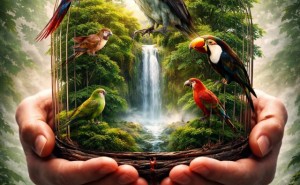
The Threat of Ecosystem Collapse Caused by Illegal Wildlife Trade and Captive Keeping
Posted 2026-02-03Illegal wildlife trade and the private keeping of wild animals constitute one of the most critical threats to global biodiversity in the 21st century. Among the most affected taxa, wild and rare birds are disproportionately targeted due to their aesthetic appeal, vocal abilities, rarity, and symbolic status. This practice is particularly prevalent among affluent individuals, where wild birds are kept as luxury possessions rather than living components of complex ecosystems. Drawing upon peer-reviewed scientific literature, authoritative ecological textbooks, and reports from international conservation organizations, this article examines the ecological, genetic, behavioral, ethical, and public health consequences of illegal bird trade and captive keeping. Furthermore, it highlights the essential role of non-profit organizations such as Samaneh Heyvanat and the Birds Branch Campaign as community-based institutions dedicated to wildlife protection, and explores pathways through which the public and experts can actively support conservation efforts.
-
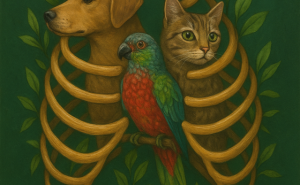
“The Disadvantages of Animal Sterilization: A Scientific Review of Hidden Harms to Health, Behavior, and Ecosystems”
Posted 2025-10-09Abstract Sterilization (neutering or spaying) is widely practiced as a means to manage the population of companion and street animals. While many advocates emphasize its benefits — such as reducing overpopulation and some reproductive diseases — growing evidence points to a suite of potential drawbacks. This article offers a scientific-analytical examination of the disadvantages of animal sterilization, particularly in street and free-roaming populations. We investigate health, behavioral, ecological, genetic, and ethical dimensions, review limitations in existing research, and propose more balanced, humane strategies.
-
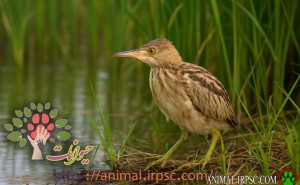
Saving the Butimar chick and the role of the Bird Branch Campaign in protecting waterfowl habitats
Posted 2025-09-02Wetland birds are an inseparable part of the nature of Iran and the world. In addition to their visual beauty, they play a fundamental role in the food cycle, pest control, and maintaining the health of aquatic ecosystems. One of these valuable birds is the bittern; a small bird from the heron family known for its distinctive call and camouflaged appearance. In recent years, with the increasing destruction of wetlands and habitats, more and more reports have been published of bittern chicks being found along roads or human-made areas. The main question is: If we encounter such a bird, what is the best way to save the birds and return them to nature? One of the public institutions working in this field is the Bird Branch Campaign; a voluntary movement that aims to educate, support, and protect birds and their habitats. In this article, we will provide a complete introduction to the botimar, its natural habitat, the correct way to deal with its chicks, and the role of the Bird Branch Campaign in this regard.


